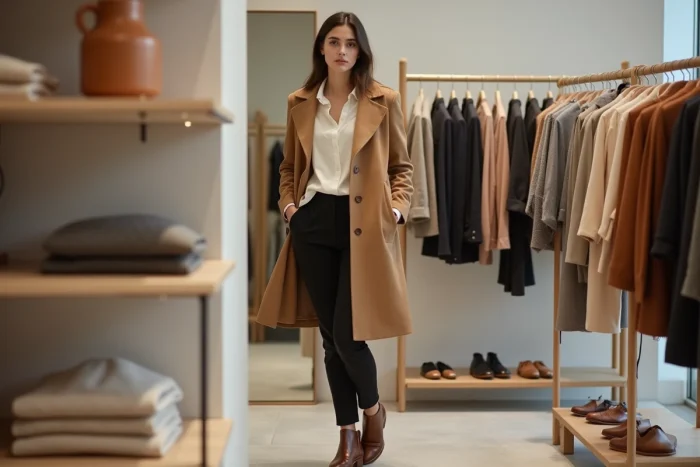
When you open your wardrobe on a May morning and nothing works together, it’s often because there’s a missing thread connecting the pieces. Current fashion trends provide concrete guidelines to rebuild a coherent wardrobe without having to buy everything new.
Materials and finishes: what really changes in the spring 2026 collections
Store windows display linen, brushed cotton, and blends made from recycled fibers. In practice, the difference lies less in the “natural material” label than in the garment’s finish. A wrinkled linen jacket doesn’t serve the same purpose as a tailored linen jacket with partial lining.
We also see the arrival of hybrid textures that mimic leather or silk without the price or maintenance. These materials are suitable for those who want a polished look without daily ironing. The trend is not towards raw fabric for the sake of it, but towards fabric that lasts several seasons without losing its shape.
The European directive on the green transition, adopted in January 2024, is pushing brands to revise their collection descriptions. The terms “responsible capsule” or “recycled material” will need to be more rigorously justified by 2026, which should clarify choices for buyers. Already on Owly Mary’s fashion page, there are pieces whose materials and manufacturing processes are detailed, a reflex that will become widespread.
Seasonal colors and neutral palette: how to cut without making mistakes

Every spring brings its share of “key colors.” The trap is buying a piece in a trendy color that doesn’t match anything else in the wardrobe. Before falling for a sage green or a sienna brown, check that it can be worn with at least three bottoms or tops already owned.
Building your palette around two neutrals and one accent color remains the most reliable method. For example: off-white, heather gray, and a single bold shade (burgundy, teal, terracotta). Brightly colored pieces work better as accessories or tops than as pants, because they are less likely to become tiresome when the surface worn is reduced.
Resale data on second-hand platforms confirm this pattern. Garments in colors too strongly associated with a specific season lose their appeal within months, while pieces in neutral or classic shades retain their resale value. On Vestiaire Collective, queries around timeless categories have shown a clear increase in recent months.
Jeans, dresses, and structured jackets: three pieces to consider this season
Instead of listing ten “essentials,” let’s focus on three pieces that raise concrete questions at the time of purchase.
The jeans: straight cut or wide leg
The wide leg cut has dominated women’s displays for several seasons. In practice, it elongates the silhouette as long as you wear shoes with a minimum height (even two centimeters are enough). With flat sneakers, the straight jeans remain more flattering and versatile. Feedback varies on this point depending on body shape, but trying on in the fitting room with your own shoes quickly settles the debate.
The dress: favor structure over pattern
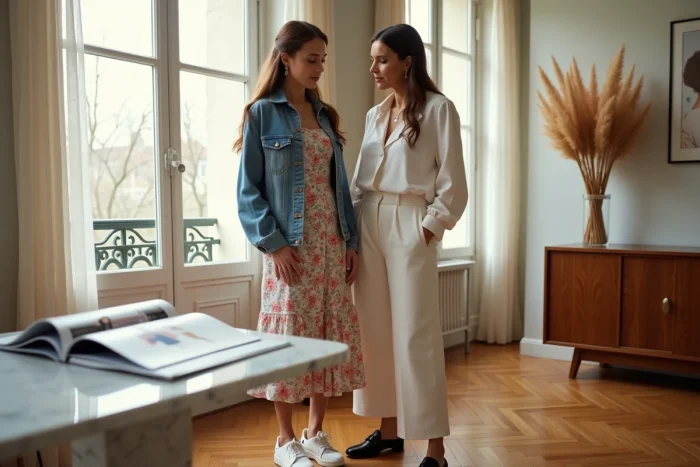
A floral print dress catches the eye in-store. For daily wear, a solid color dress with a tailored cut (darts, integrated belt, structured collar) is worn more often. The pattern confines you to a specific style, while the cut adapts to accessories.
The jacket: the most cost-effective investment in the wardrobe
A structured jacket, whether a blazer, safari jacket, or fitted bomber, transforms a jeans-t-shirt outfit into a complete look. This is the piece on which it’s best to concentrate your budget. It’s better to have one well-cut jacket than three trendy tops that won’t last through the fall.
Repair and customization: the fashion trend that changes buying habits
The right to repair adopted by the European Union in April 2024 doesn’t only apply to appliances. Several European brands like Zalando, Patagonia Europe, or Decathlon have already expanded their alteration, repair, and internal resale services. This movement is changing the way we think about fashion purchases.
A damaged garment is no longer automatically a garment to be thrown away. Here are the reflexes that are taking hold:
- Check before purchasing if the brand offers alteration or repair services, which is becoming a selection criterion on par with cut or price
- Customize a basic piece (embroidery, dyeing, adding buttons) to give it a unique character without buying new
- Resell on second-hand platforms pieces that are no longer used, rather than storing them, which finances the purchase of the next piece
This circular approach is not about fashion activism. It responds to a simple budget constraint: maintaining and adapting costs less than replacing every season.
Building a personal style without following all fashion trends
The most common trap when consulting content on trends is wanting to integrate everything. A successful look relies on deliberate choices, not on the accumulation of trendy pieces.
- Identify two or three trends that correspond to your actual lifestyle (office, weekend, outings) and ignore the rest
- Test a new piece with what you already own before renewing an entire section of your wardrobe
- Accept that a popular trend simply may not suit your silhouette or daily life
Style is built through subtraction as much as through addition. Removing from the wardrobe what you no longer wear frees up mental and physical space. The remaining pieces combine better with each other, and future purchases become more precise.
This season’s fashion trends all point in the same direction: less volume in the closet, more thoughtfulness about each piece. Whether through the choice of materials, the construction of a coherent palette, or the maintenance of the clothes you already own, the guiding thread remains the same. A wardrobe tightened around a few well-chosen pieces dresses better than a closet full of compromises.