A harmonious garden rests on a principle often overlooked: the coherence between the soil, exposure, and chosen plants. Creating a welcoming garden is not just about aligning flower beds. Success lies in how each element, from the terrace surface to the shrub layer, interacts with its neighbor and the constraints of the terrain.
Plant Palette and Heat Waves: Adapting Your Plants to the Real Climate
The repeated heatwaves in recent years have changed the practices of nurserymen and individuals. The Union of Landscape Enterprises (UNEP) has reported since 2023 a marked shift in garden projects towards drought-adapted plant palettes and a reduction in grassed areas in new residential developments.
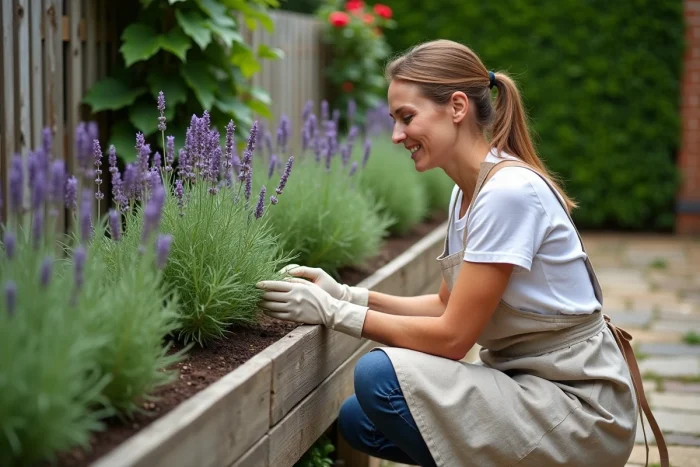
This change is not limited to the south of France. In traditionally temperate regions, summer watering restrictions are prompting a rethink of species selection. Lavenders, shrubby sages, ornamental grasses, or olive trees are gradually replacing thuja hedges and traditional lawns.
Favoring water-efficient plants does not mean sacrificing diversity. A bed composed of Mediterranean perennials, a few evergreen shrubs, and a shade tree offers a dense visual result year-round. Resources like perspectives-jardin.fr allow exploration of plant associations suited to these new climatic constraints.
Soil Structure and Drainage: The Invisible Foundation of a Successful Design
Before planting anything, a simple test provides crucial information. Dig a hole about thirty centimeters deep, fill it with water, and observe the absorption rate. Clay soil retains water for several hours, while sandy soil allows it to drain away in a few minutes.
Drainage is more critical to the survival of plants than fertilizer or watering. A waterlogged soil in winter causes root asphyxiation. A soil that drains too well dries out plants at the first dry spell.
Correcting Soil Without Replacing It
On clay soil, adding mature compost and coarse sand improves porosity without requiring heavy excavation. On sandy soil, organic mulching (shredded branch wood, fallen leaves) retains moisture and gradually enriches the soil.
- Compact clay: incorporate compost into the top twenty centimeters and mulch on the surface to limit compaction from rain.
- Draining sand: mulch generously with organic materials and favor deep-rooted plants like yarrow or echinacea.
- Limestone soil: work with tolerant plants (boxwood, iris, rosemary) rather than trying to artificially acidify the ground.
This often-overlooked step prevents the need to replace dead plants after two seasons, a common scenario when landscaping starts with aesthetics without considering the soil.
Ecological Continuities in a Private Garden: Beyond Aesthetics
The Greater Paris Metropolis published a Vegetalization Guide in 2023 that recommends integrating ecological continuities even in private gardens. The concept is not abstract: it involves creating passages for wildlife between plots.
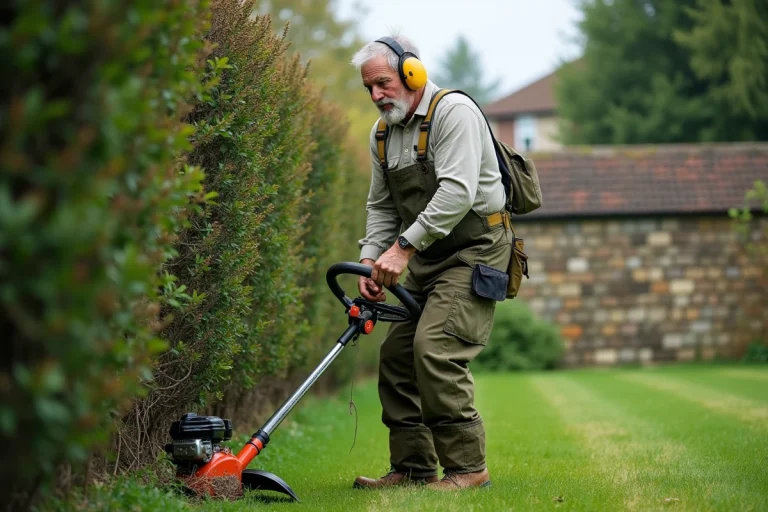
A living hedge composed of local species (dogwood, elderberry, hazel) simultaneously fulfills three functions: windbreak, refuge for nesting birds, and visual barrier. A dry stone wall shelters lizards and beneficial insects that naturally regulate aphid populations.
Unmowed Areas and Flowering Meadows
Leaving a corner of the garden unmowed, even over a few square meters, significantly increases the presence of pollinators. An unmowed area is not a neglected space; it is a landscaping choice that contributes to the garden’s biological balance.
Associating a flowering strip (phacelia, clover, centauries) along the edge of a vegetable garden attracts beneficial insects. The garden gains autonomy, and maintenance decreases because local biodiversity works in place of the gardener.
Lighting and Furniture: Creating an Atmosphere Without Cluttering the Space
Outdoor lighting transforms a garden at dusk, but excessive artificial light disturbs nocturnal wildlife and creates a cold atmosphere. Two or three low light points are sufficient to mark a pathway and highlight a tree or a bed.
Low-intensity solar lights, directed towards the ground, avoid light pollution while ensuring safe movement. Placing a warm light source near the terrace naturally delineates the relaxation area without harsh overhead lighting.
Wooden Garden Furniture: Aging and Maintenance
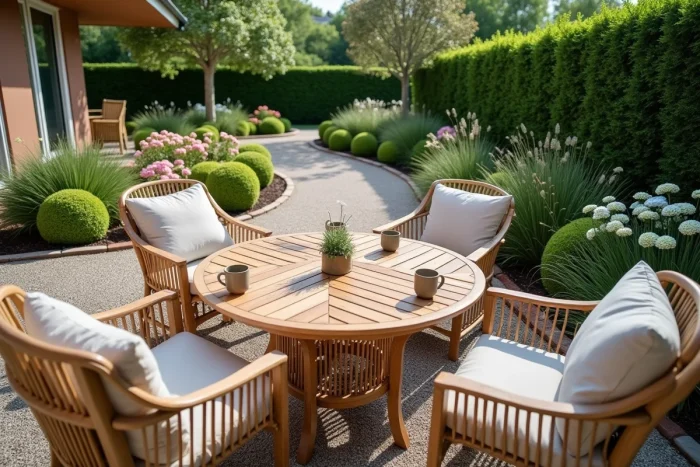
Wood remains the material that integrates best into a garden. Class 4 species (robinia, chestnut) resist moisture without chemical treatment. Untreated wooden garden furniture will gray over time, giving it a natural look that is consistent with the surrounding vegetation.
- Avoid exotic woods with uncertified origins: local chestnut offers comparable durability.
- Clean the furniture once a year with black soap, without a pressure washer, to preserve the wood fibers.
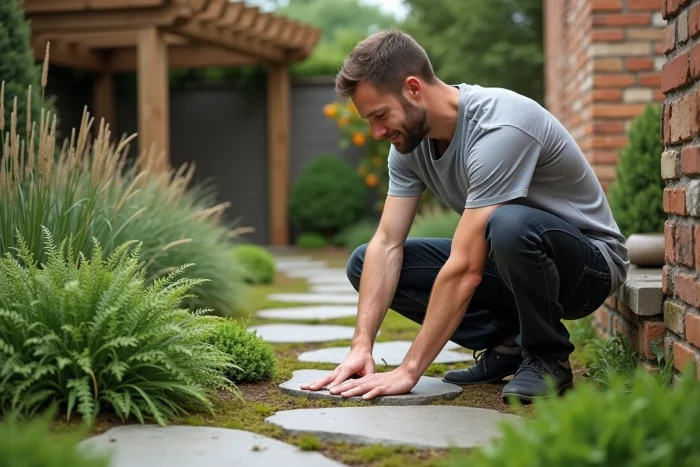
- Position the table and seating on a stabilized surface (compacted gravel, slabs on a sand bed) to avoid sinking into soft soil.
The choice of the ground under the terrace and furniture deserves as much attention as the selection of plants. A light-colored paving reflects heat, while dark gravel absorbs it. The orientation of the terrace dictates the comfort of use: full west for summer dinners, east for cool breakfasts.
A welcoming garden is built in successive layers, from the soil to the lighting, with each decision influencing the next. The most costly mistakes rarely come from the choice of flowers, but from poorly prepared ground or a layout that ignores the actual use of the space.