Creating a style that stands the test of time means understanding which pieces carry you through the seasons and which are just passing trends. Women’s fashion moves between versatile basics and fleeting trends, and the balance between these two categories determines how cohesive a wardrobe feels. Rather than listing outfits, this article looks at what sets a functional wardrobe apart from a collection of underused pieces.
Trend pieces and timeless basics: what the ratio reveals about a woman’s wardrobe
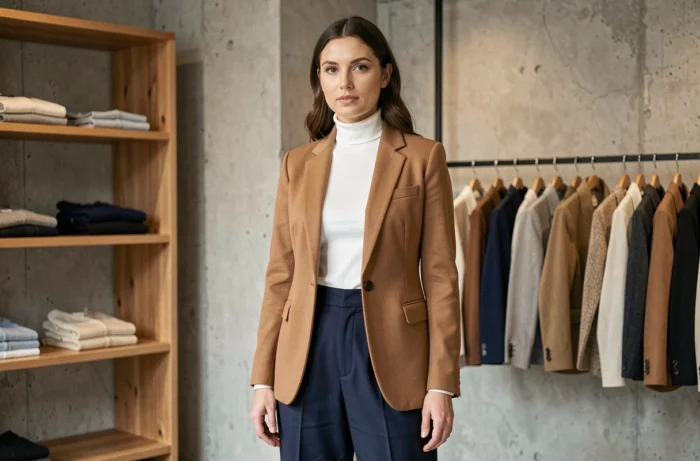
A wardrobe is built around two categories of clothing. Basics (straight-leg jeans, a white shirt, a trench coat, a blazer) provide the foundation. Trend pieces (a seasonal cut, the color of the moment, a graphic print) add interest. An imbalance between these two categories has a measurable effect on how many outfits actually get worn.
| Category | Average lifespan in the wardrobe | Number of possible combinations | Wear frequency per season |
|---|---|---|---|
| Versatile basic (jeans, blazer, plain T-shirt) | 3 to 5 seasons | High (pairs with most other pieces) | Several times a month |
| Moderately trendy piece (current cut or color) | 2 to 3 seasons | Medium (requires complementary basics) | A few times a month |
| Very trendy piece (bold print, extreme cut) | 1 season | Low (pairs with few other pieces) | Worn fewer than five times before being abandoned |
This table highlights a clear difference: a basic creates more outfits than a very trendy piece. Personal style is built on this insight. Women who describe their look as cohesive generally have a foundation of basics that makes up most of their wardrobe, complemented by a few carefully chosen trend pieces.
The advice featured on the Chroniques Blondes fashion website follows the same approach, favoring practical combinations of long-lasting pieces and seasonal accents over a complete wardrobe refresh every season.
Body shape and clothing cuts: the difference between trendy and flattering
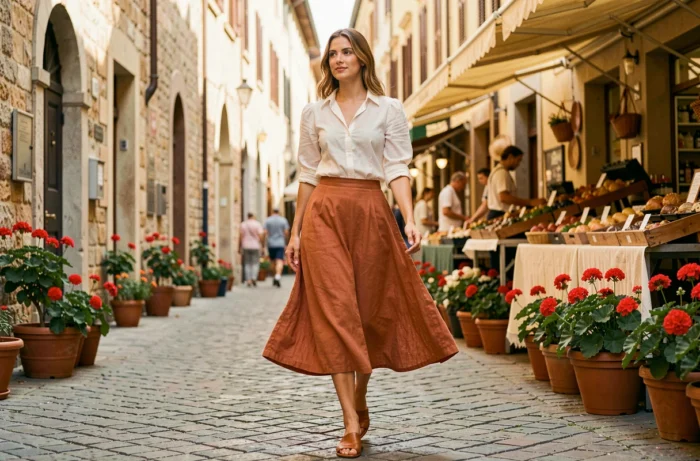
A women’s fashion trend does not have the same effect on every figure. An oversized dress, for example, can elongate a slim figure but overwhelm a shorter frame. High-waisted jeans define the waist on a pear-shaped figure, while they can create visual imbalance on an inverted-triangle figure if the top is too fitted.
The cut matters more than the trend when it comes to a successful look. Two women wearing the same oversized blazer can get radically different results depending on their leg length and shoulder width.
Fit criteria to check before buying a trend piece
- The garment’s length and where it cuts across the figure: a midi skirt that ends at the calf can make the legs look shorter, while the same skirt ending just below the knee makes them look longer
- The volume of the top compared with the bottom: a loose top calls for a fitted bottom (and vice versa) to avoid a uniformly bulky look
- Where the garment’s waistline sits: a waistline above the navel creates the illusion of longer legs, while a low waist has the opposite effect
- The fabric’s structure: a structured fabric (heavy cotton, raw denim) creates a clean line, while a fluid fabric (viscose, silk) follows the curves without constricting them
These criteria don’t change from season to season. They provide a consistent way to assess whether a trend deserves a place in your wardrobe.
Accessories and personal style: where the real opportunity lies
Accessories are the most underestimated part of putting together a women’s look. The same basic outfit (straight-leg jeans, a white T-shirt, a black blazer) creates three distinct moods depending on whether you add white sneakers, pumps or block-heel ankle boots.
Accessories transform a basic outfit without adding more clothes to your wardrobe. A structured bag gives a polished feel, while a soft bag looks more casual. A slim leather belt is all it takes to redefine the silhouette of a straight-cut dress.
Jewelry works the same way. Statement earrings with a plain turtleneck create a focal point that can take the place of a standout garment. This approach lets you follow fashion trends without accumulating clothes: investing in accessories costs less and gives your looks more variety.

European textile regulations: what will change when choosing clothes
The European Ecodesign Regulation sets out requirements that may cover product durability, repairability and recyclability. The EU’s timeline targets the textile and clothing sector in 2027. Brands will also have to manage what happens to their collections at the end of their life cycle: resale, donation and reuse are playing a growing role in managing unsold stock.
The Digital Product Passport could make each garment’s composition, origin and durability characteristics accessible. The requirements that apply to clothing will depend on future textile-specific rules, but the principle is already in place.
For consumers, this means future access to concrete information about what they buy. Choosing a garment will no longer depend solely on its appearance or price, but also on verifiable indicators of textile quality. Brands’ contributions may be adjusted according to ecodesign-related criteria, which should encourage collections made with more durable fabrics.
Practical implications for your wardrobe
- Pieces designed to last for several seasons will become easier to identify thanks to the information in the Digital Product Passport
- The secondhand market will become more reliable when each garment carries traceable information about its composition and origin
- Fleeting trends made from less durable materials could become more expensive if ecodesign contributions penalize products with low recyclability
Personal style and women’s fashion trends sit at the intersection of two competing priorities: the desire for something new and the need to build a wardrobe that lasts.
The comparative data in the table confirms it: a wardrobe made up mostly of well-cut basics, complemented by a few trend pieces chosen for their fit, produces more frequently worn outfits than one packed with seasonal pieces. The European regulatory framework taking shape for 2027 will reinforce this approach by making textile quality measurable at the point of purchase.