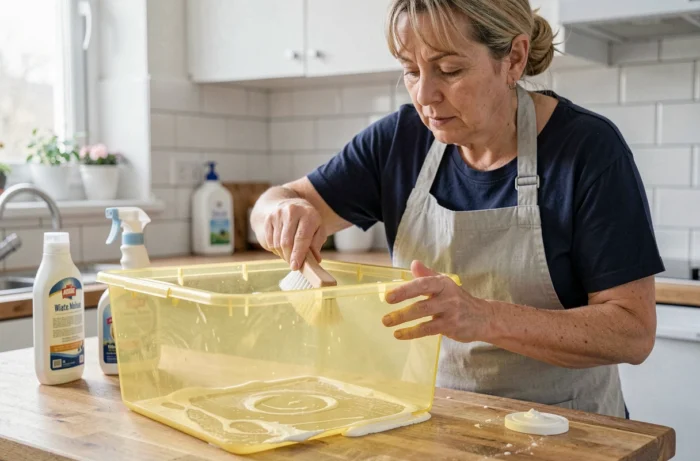
Clear plastic often turns yellow without warning. Car headlights, phone cases, appliance housings, greenhouse panels: a yellowish tint gradually develops under the combined effects of UV rays and polymer oxidation. This phenomenon, known as photo-oxidation, breaks down the material’s molecular chains and changes its color from within. Before scrubbing or applying a product, one often-overlooked first step is to distinguish simple dirt from structural yellowing of the plastic.
Dirt or structural yellowing: diagnose before cleaning
Clear plastic that looks yellow isn’t always actually discolored. Grease, nicotine, embedded dust, or residue from cleaning products can create a yellowish film that is easily mistaken for material aging.
The test is simple: wash the item with lukewarm water, mild soap, and a soft cloth, then rinse and dry it. If the yellow tint disappears, the problem was superficial. If it remains, the plastic itself has changed, and standard cleaning methods won’t be enough.
This distinction matters because using a whitening product on plastic that is merely dirty means using an aggressive treatment for no reason. Conversely, scrubbing harder with soap won’t make any visible difference to plastic that has yellowed structurally. To better understand how to clean yellowed clear plastic, you first need to identify the type of yellowing you’re dealing with.
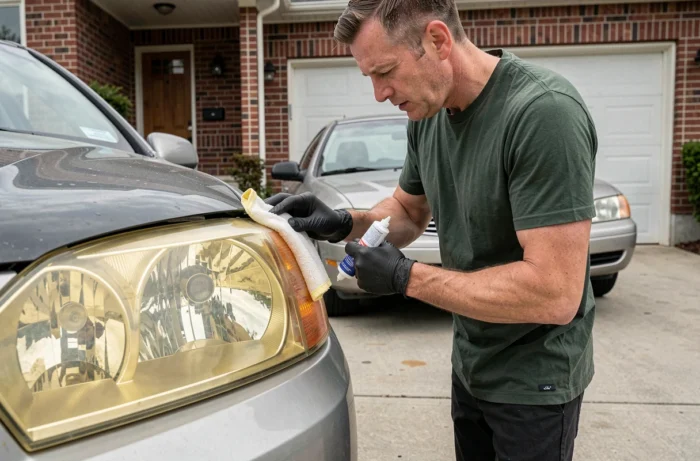
Acrylic, polycarbonate, PVC: different reactions to cleaning products
Competing articles offer universal recipes (baking soda, white vinegar, hydrogen peroxide) without mentioning a crucial point: not all clear plastics react the same way. A product that is safe for PVC may dull or crack acrylic (PMMA). A solvent that works on polycarbonate may damage an optical coating.
Acrylic (PMMA)
Acrylic is sensitive to solvents and products containing ammonia. Standard glass cleaners, which often contain ammonia, can leave an irreversible whitish haze on this material. Clean it only with warm soapy water and a microfiber cloth.
Abrasives—even fine ones, such as baking soda mixed into a paste—can scratch acrylic. These micro-scratches scatter light and create a cloudy appearance, making the problem worse rather than solving it.
Polycarbonate
Polycarbonate is more impact-resistant, but it is also vulnerable to certain solvents (acetone, concentrated isopropyl alcohol). Diluted hydrogen peroxide and a light baking soda paste are better tolerated on this material, provided you don’t scrub with an abrasive pad.
Clear PVC
PVC tolerates a wider range of products, including white vinegar and diluted bleach. It is the easiest plastic to whiten using common household remedies. There is more room for error than with acrylic.
Before trying anything, check the type of plastic and consult the manufacturer’s instructions to avoid turning reversible yellowing into permanent damage.
Methods for whitening clear plastic: what works and what causes damage
Once you’ve diagnosed the problem and identified the material, three approaches stand out for their effectiveness on clear plastic.
Hydrogen peroxide and UV light
The best-documented method for structural yellowing involves applying hydrogen peroxide to the surface, then leaving the item in the sun for several hours. UV rays trigger a reaction that breaks down the chromophores responsible for the yellow tint.
- Apply a sufficient concentration of hydrogen peroxide (available at pharmacies) with a brush, or submerge small items
- Place the item in direct sunlight, ideally wrapped in clear plastic film to keep the product in contact with the surface
- Leave it for several hours, monitoring the progress: results depend on UV intensity and exposure time
- Rinse thoroughly with clean water and dry with a soft cloth
This method works well on PVC and polycarbonate. On acrylic, it’s best to test it on an inconspicuous area first.
Baking soda paste
Mixed with water, baking soda forms a mildly abrasive paste that removes surface deposits and reduces light yellowing. It is suitable for PVC and polycarbonate, but it cannot restore plastic whose molecular structure has changed. On acrylic, the risk of micro-scratches makes this method counterproductive for clear plastic.
White vinegar
White vinegar works as a degreaser and descaler. It effectively removes limescale and greasy marks from all types of plastic, but has limited effect on structural yellowing. It’s a good first step for cleaning, not a whitening treatment.
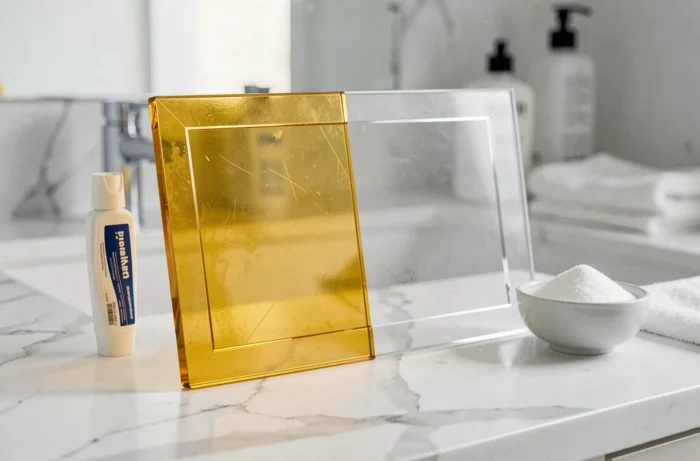
How to prevent clear plastic from yellowing over time
Whitening yellowed plastic without addressing the causes means having to do it again every year. Photo-oxidation is the main culprit, and prevention comes down to a few practical steps.
- Limit direct sunlight: a blind, UV-blocking film, or simply moving the item can significantly slow yellowing
- Clean regularly with soapy water to prevent deposits from building up and accelerating deterioration
- Avoid harsh cleaners (ammonia, acetone, chlorinated solvents), which weaken the surface and make it more vulnerable to UV rays
- Apply a plastic-specific UV protectant if the item stays outdoors (garden furniture, car headlights)
Keeping plastic out of the light is the most effective way to preserve its clarity. Items stored in a cupboard or drawer hardly yellow at all, even after several years.
When yellowing is too advanced, no home method can guarantee a complete return to the original clarity. The molecular damage is then irreversible, and replacing the item is the only realistic option. It’s better to act early, at the first signs of yellowing, than to wait until even hydrogen peroxide is no longer enough.