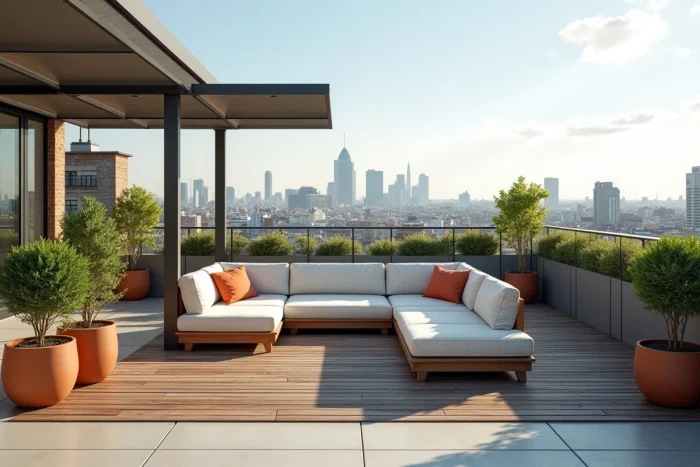
On a rooftop, the constraints are unlike anything encountered at ground level: constant wind, limited structural load, waterproofing to maintain. The design of a rooftop terrace starts from these realities before considering decoration. Here are ten concrete tips, tested in the field, to transform a flat roof into a true outdoor living space.
1. Check the allowable load before purchasing furniture

A rooftop terrace is not a garden. The slab has a load-bearing capacity defined by the building’s engineering office, and this limit conditions everything else: weight of plant pots, flooring, furniture. Before ordering anything, obtain the structural plan or consult a surveyor.
In a co-ownership, the regulations often impose additional restrictions. Certain installations (fixed pergola, jacuzzi) require approval at the general assembly. Good tips for designing a rooftop terrace also detail this regulatory aspect.
2. Protect the waterproofing with suitable flooring

The existing waterproofing (bituminous membrane or resin) should never be pierced or crushed by a point load. The most reliable system remains the installation on adjustable pedestals: wooden decking, composite slabs, or porcelain stoneware planks can be laid without fixing into the membrane.
The pedestals create an air gap that facilitates the drainage of rainwater and allow for inspection of the membrane in case of doubt. This way, unpleasant surprises after a rainy winter are avoided.
3. Install windbreaks instead of traditional privacy screens
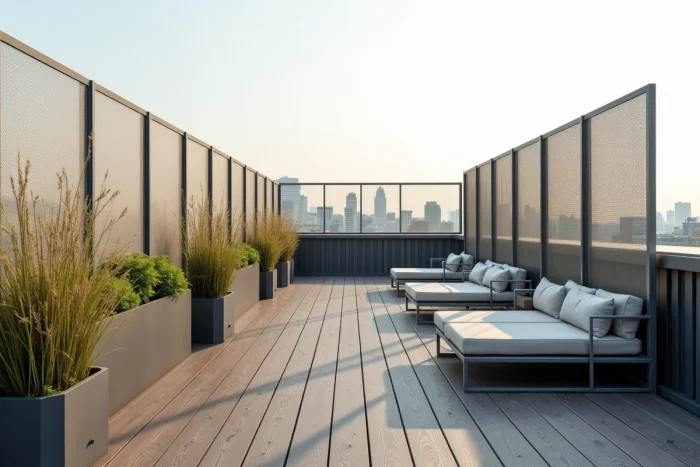
At height, wind is the primary nuisance. A low-quality textile privacy screen tears within a few months. What is needed are rigid or semi-permeable windbreaks: tempered glass panels, slatted wooden screens, or reinforced reed screens fixed to a self-supporting structure.
A permeable windbreak (about 50% opening) reduces wind force without creating turbulence behind the screen. Solid panels, on the other hand, can create a swirling effect that may be worse than the wind itself.
4. Choose plants resistant to extreme thermal fluctuations
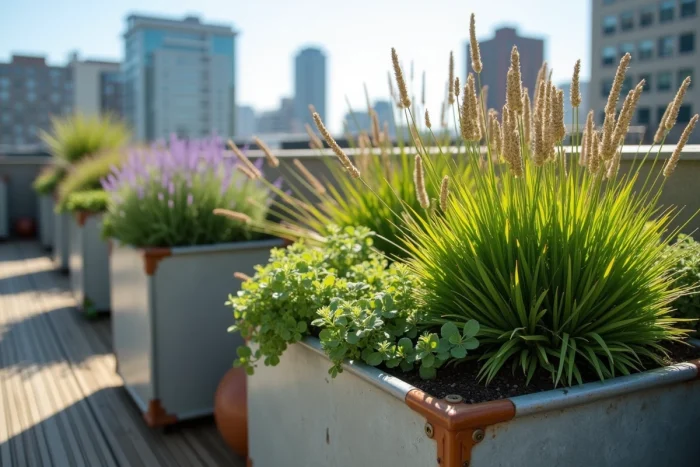
On a rooftop, plants experience prolonged direct sunlight, drying winds, and temperature fluctuations much more pronounced than at ground level. Classic balcony species (geraniums, impatiens) rarely last more than one season.
Focus on grasses, lavenders, sedums, and local nectar-producing species that tolerate drought and frost. Recent projects even integrate extensive greening areas with lightweight substrates designed to accommodate pollinators, in line with the biodiversity roofs encouraged by Cerema and the French Office for Biodiversity.
5. Create distinct zones with modular furniture
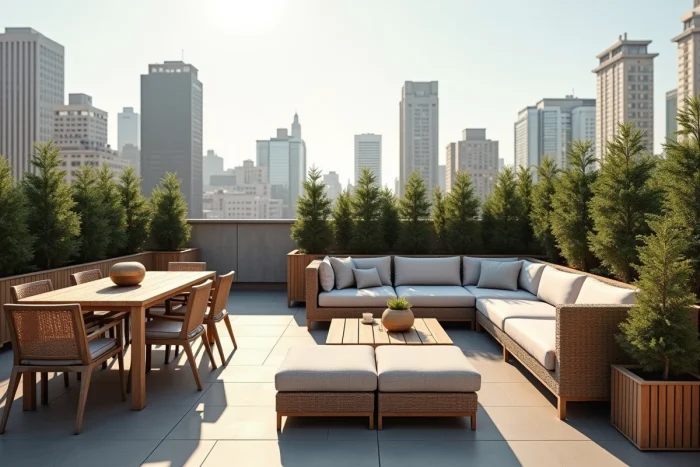
A medium-sized rooftop benefits from being divided into two or three zones: dining area, relaxation space, and possibly a small raised bed garden. Modular furniture (stackable benches, extendable tables) allows for reconfiguring the space according to use.
Avoid overly heavy furniture (solid wrought iron, stone) for load reasons, but also for practicality. Aluminum and woven resin offer a good compromise between lightness and weather resistance.
6. Plan low-voltage lighting on an independent circuit
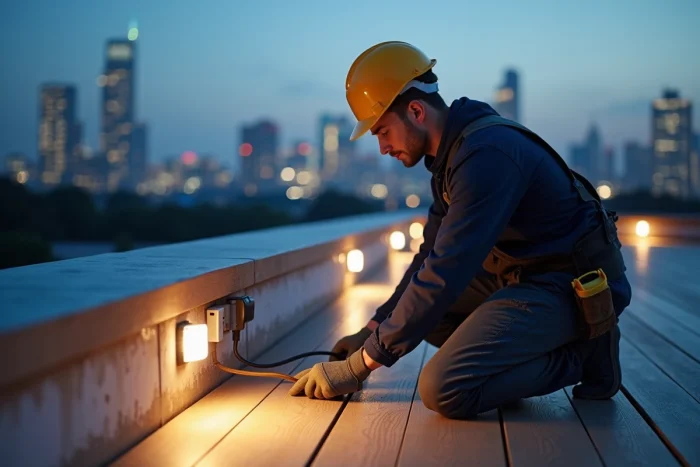
Lighting transforms a rooftop into a usable space in the evening, but it requires a dedicated circuit, protected by a differential circuit breaker suitable for outdoor use. Low-voltage LED string lights, recessed spotlights in terrace pedestals, and solar bollards cover most needs.
Avoid tall lamps, which catch the wind and dazzle the neighbors. Feedback varies on solar bollards depending on exposure, but on a clear south-facing roof, they generally work well.
7. Opt for removable sun protection
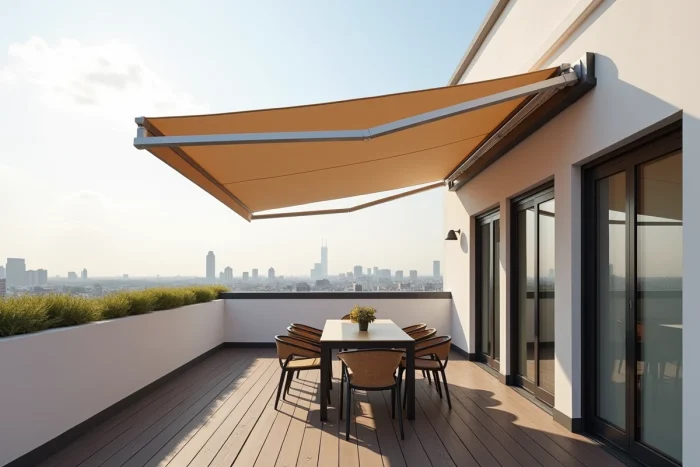
Triangular or rectangular shade sails remain the most suitable solution for rooftops: lightweight, removable in case of storms, and fixed on self-supporting masts rather than in the masonry.
Offset umbrellas also work, provided the base is weighted with a sufficiently heavy stand. A fixed pergola, however, requires prior work declaration and sometimes a building permit depending on the covered area.
8. Integrate waterproof storage for small equipment
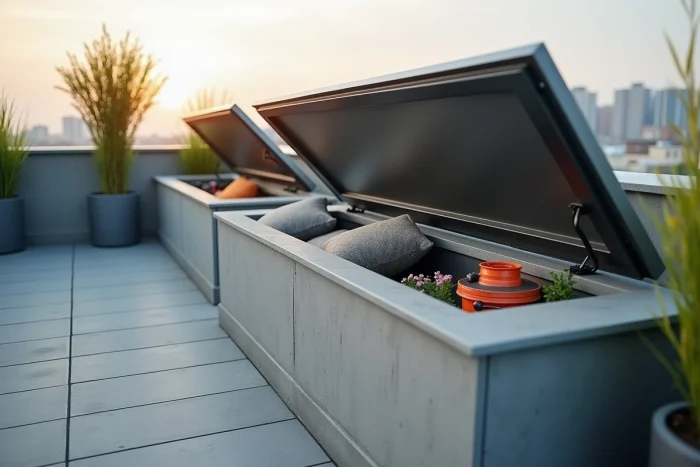
Cushions, tablecloths, gardening tools, extension cords: on a roof, everything left lying around ends up soaked or blown away by the wind. A waterproof storage chest integrated into a bench solves both problems at once.
You can also install a small low resin cabinet against a wall, provided it is secured to prevent it from tipping over. Invisible storage frees up visual space and makes the rooftop more pleasant on a daily basis.
9. Pay attention to acoustic insulation of the floor for neighbor comfort
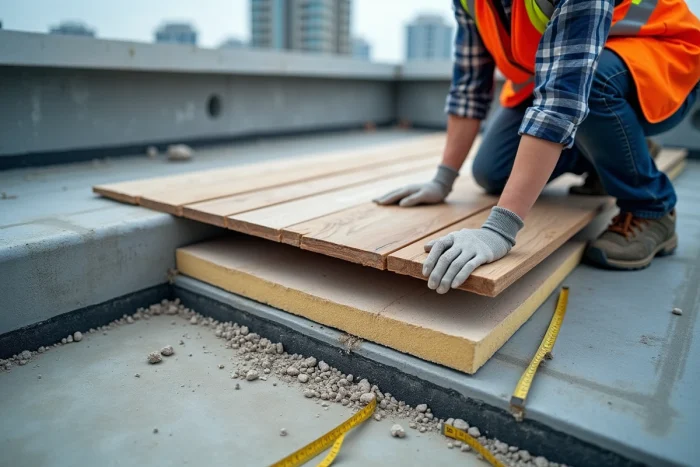
Impact noises (footsteps, chairs being moved) transmit directly through the slab to the apartment below. This is the most frequent source of conflicts in co-ownership. A resilient underlayment under the terrace pedestals significantly reduces these transmissions.
Slabs on pedestals with integrated rubber pads offer a good level of attenuation. You can complement this by adding felt pads under the furniture legs, a simple gesture that changes cohabitation.
10. Choose materials that comply with RE2020 and fire standards
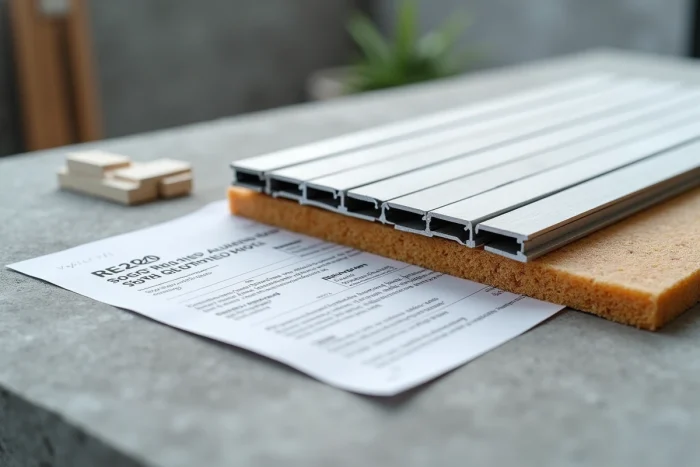
Since the implementation of RE2020 for new constructions, materials installed on an accessible rooftop terrace must combine enhanced insulation and suitable fire classification. Untreated wood or cheap plastics no longer meet the requirements.
Look for low-carbon composites or certified wood with fire-retardant treatment. For greening, lightweight substrates based on pozzolana meet both load constraints and thermal standards. A landscape architect specialized in rooftop design can assist with these technical choices.
Each rooftop has its own structural constraints, exposure, and local regulations. The ten points discussed here cover angles that are often discovered too late, once the furniture is delivered or the membrane is pierced. Taking the time to check the load, waterproofing, and regulatory framework before thinking about decoration remains the best investment for enjoying this elevated space sustainably.