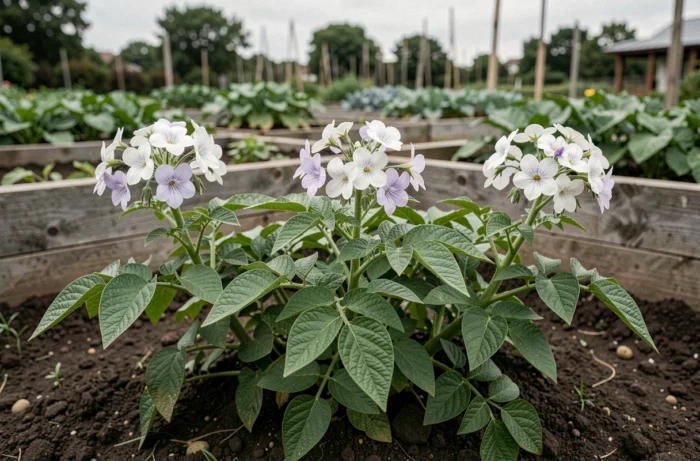
We planted potatoes in March or April, the plants grew, and one morning the first flowers appear. The instinct is to grab the garden fork, but flowering is only a rough guide. Tubers can start forming before the flowers appear, and some varieties simply don’t flower at all. It’s best to look at several signs before harvesting.
Non-flowering varieties: adjust your harvest timing when there are no flowers
Not all potatoes play along when it comes to flowering. Some modern varieties have been bred to channel their energy into tubers rather than reproduction. The result: you wait for flowers that will never come and leave the tubers in the ground too long.
When dealing with an unknown variety (perhaps from a neighbor or vaguely labeled), the most reliable method is the test tuber. Gently loosen the soil around the base of a plant by hand, without pulling it up. If the tuber has reached a satisfactory size, you can start harvesting new potatoes.
To complete your assessment, check the foliage. As L’Esprit Nature’s advice explains, its condition remains the most universal signal. Green, vigorous foliage indicates that the plant is still growing. Foliage that gradually turns yellow signals that the growing cycle is coming to an end.
By combining these two observations (tuber size and foliage color), you get a much more reliable guide than the presence or absence of flowers alone.
Skin test: how to tell if potatoes are ready for storage
Harvesting new potatoes and harvesting potatoes to store through the winter aren’t the same task, and they don’t happen at the same time. For new potatoes, a good size is enough. For storage, it’s the maturity of the skin that matters.
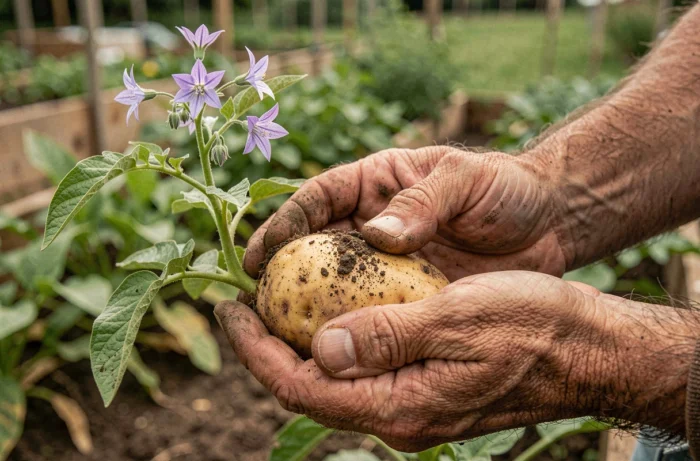
The test is simple. Take a tuber and rub its skin with your thumb. If the skin comes off easily, the tuber is still too young to store. It will dehydrate quickly and be vulnerable to storage diseases. If the skin stays firmly attached and resists rubbing, the tuber has reached the right stage of maturity for storage.
Check this alongside the drying foliage. When the stems have been completely dry for about ten days, the skin has generally had time to toughen. You can then dig up the whole row with confidence.
Let the tubers dry after digging them up
Once out of the ground, potatoes shouldn’t go straight into a bag. Leave them to dry in the open air for a few hours, in the shade, on the garden soil or on a rack. This helps the skin toughen further and makes it easier to brush off any remaining soil.
- Spread the tubers out in a single layer without stacking them, so air can circulate around each potato.
- Set aside any potatoes with green patches, fork damage, or soft spots right away: they won’t keep.
- Then store them in a cool, dry, dark place, ideally between 6 and 10 degrees.
Foliage that suddenly turns black: don’t confuse maturity with a health problem
Foliage that yellows slowly from the bottom up over several weeks is part of the normal cycle. Foliage that turns black or breaks down within a few days is another matter. Late blight, in particular, can destroy foliage very quickly, making it look as though the plant has simply “finished its cycle.”
Before treating dead foliage as a sign that it’s time to harvest, check two things:
- The appearance of the stems: brown or black spots accompanied by an oily look point to late blight rather than natural dieback.
- The condition of the tubers underground: if any have brown patches or give off an unpleasant smell, harvest immediately and sort them carefully.
- The weather: a very wet spell increases the risk of rot. In that case, it’s best not to wait—dig up the tubers and let them dry.
If in doubt, harvesting quickly limits the damage. Healthy but slightly immature tubers won’t keep as long, but that’s better than losing the entire crop to contamination in the soil.
Wet soil and the garden harvest window: why the calendar isn’t enough
You often read that potatoes are harvested “in July” or “90 days after planting.” These calendar guidelines give you a rough idea, but soil conditions and the weather at the time matter more than the date.
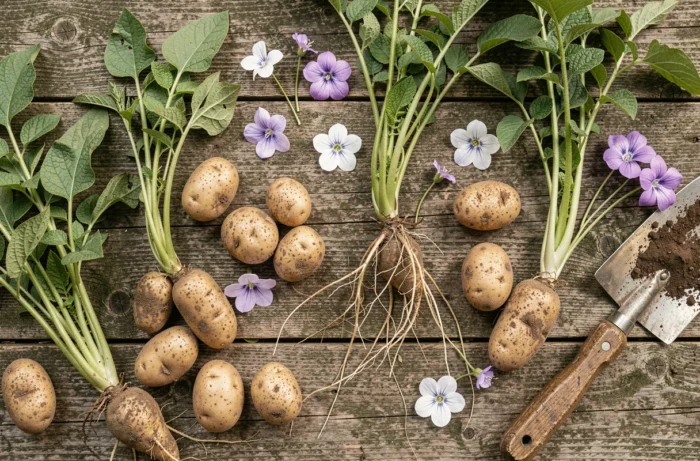
Soil that stays waterlogged encourages tubers to deteriorate. If the garden has just had a rainy spell, waiting a few days for the soil to dry out makes digging easier and reduces the risk of rot. Conversely, soil that’s too dry and compact makes it difficult to push in a garden fork and increases the risk of damaging the tubers.
The ideal time is after two or three rain-free days, when the soil crumbles between your fingers without sticking. Push the fork into the ground well away from the plant (at least twenty centimeters) to avoid piercing the tubers.
Late-season crops in mild climates
In southern France or along the Atlantic coast, some gardeners plant late and harvest in the fall. The foliage can stay green for a long time when there’s no frost. The time between flowering and harvest varies depending on the variety and local climate, making the test tuber even more useful than simply monitoring the foliage.
Whether the plants have flowered abundantly, barely flowered, or not at all, the principle is the same: observe the plant, test a tuber, and check the skin. Repeating these three steps a few days apart gives you a reliable indication of when to harvest—far more useful than any fixed date on a gardening calendar.