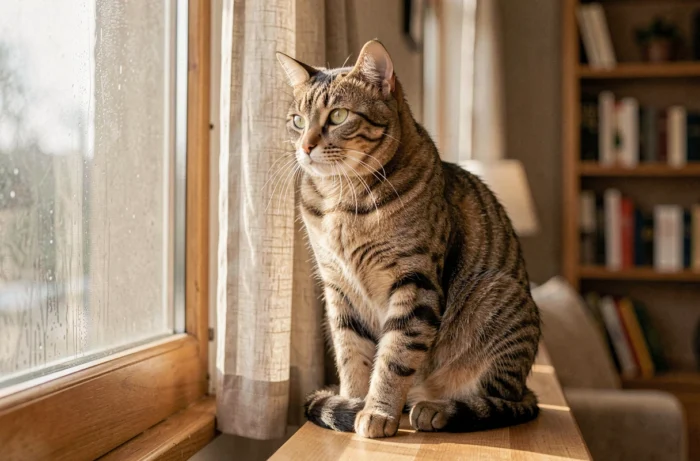
A cat staring at the wall for long minutes, another suddenly refusing its usual food, a third starting to scratch the sofa after months of calm. Before looking for a behavioral explanation, it helps to ask one simple question: could the cat be in pain? Many behaviors considered mysterious in cats are actually physical signs that go unnoticed.
Mysterious cat behavior or a sign of pain: how to tell the difference
A cat that hides more, hesitates before jumping onto furniture, or growls when touched around the belly isn’t being difficult. In cats, pain rarely shows up as audible complaints. Instead, it causes subtle changes in everyday behavior.
A cat in pain may stop grooming (dull coat, mats), start eliminating outside the litter box because it avoids climbing into it (joint pain), or, conversely, lick one specific area compulsively. Any clear break from habits established over several weeks warrants a veterinary opinion, especially if it lasts more than two or three days.
Confusion in an older cat deserves particular attention. Disorientation, changes in sleep patterns, new anxiety, or sudden house-soiling may point to cognitive decline, but they can also indicate chronic pain, sensory loss, or a metabolic disease. Don’t assume it’s simply a sign of aging without first having a veterinarian assess the cat.
To discover cats on Roxane Westie, you’ll find additional resources to help you better recognize these signs throughout the seasons.
Everyday tension between cats: the signs we miss
When we live with several cats, we watch out for fights. Scratches, hissing, and noisy chases catch our attention. What’s easier to miss are the silent tensions that undermine a peaceful household.
One cat can prevent another from reaching its litter box or food bowl simply by staring at it, following it down the hallway, or blocking a passageway. No yowling, no swatting, but chronic stress for the cat on the receiving end. Recommendations published in the Journal of Feline Medicine and Surgery in 2024 (Rodan et al., AAFP guidelines on tension between cats) emphasize the importance of watching for these subtle signals.
Spread out resources to defuse conflict
The most effective solution is to provide more access points to resources and space them apart. In practice, this means:
- At least one litter box per cat, plus one extra, placed in separate rooms or areas—not side by side in the same hallway.
- Water and food bowls placed in separate locations so no cat can control access to all of them.
- Elevated lookout spots (shelves, cat trees) in several rooms, allowing each cat to retreat without crossing paths with the other.
This setup reduces bottlenecks and lets each cat eat, drink, and eliminate without confrontation, even silent confrontation.
Enriching an indoor cat’s environment: more than just toys
Buying a feather toy and leaving it on the floor doesn’t count as enrichment. An indoor cat needs to express its natural behaviors: watching, stalking, pouncing, hiding, and climbing. The goal is to create an activity circuit that mimics hunting.
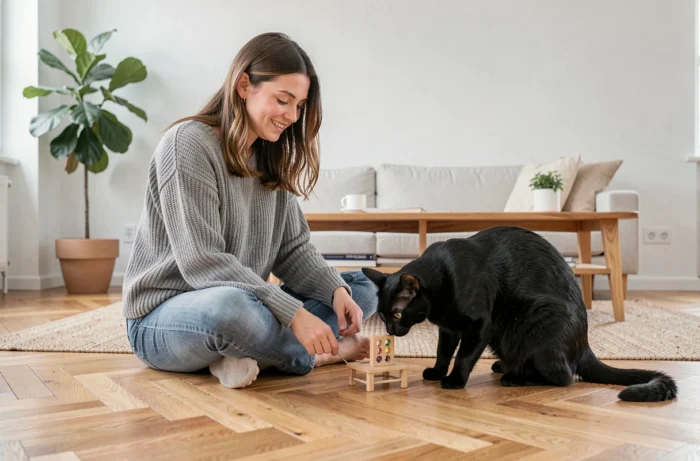
Interactive play (a fishing-rod toy or a moving string) is the most effective because it mimics the movement of prey. Two sessions of ten to fifteen minutes a day are enough to reduce frustration-related behaviors (scratching furniture, nighttime zoomies). End each session with a small amount of food: the cat hunts, catches, eats, and sleeps. This cycle matches its natural rhythm.

Safe spaces and hiding spots: an often-overlooked need
An upside-down cardboard box with a side opening, an accessible high shelf, a partly open closet: hiding spots make cats feel as secure as food does. A cat with nowhere to retreat in its environment lives in a constant state of alert, which can contribute to anxiety and urinary problems.
Interactions with people matter too. Cats need predictability: pet them when they come to you, and stop when they turn away. Forcing contact (picking them up while they struggle, waking them to play) damages trust over time.
Cat identification in France: required even for indoor cats
People often think identification is mainly for cats that go outdoors. But an apartment cat can still escape during a move, through a door left open, or while visiting the vet. In France, all cats over seven months old must be identified.
A microchip (or a tattoo, which is less common today) makes it possible to find the owner if a cat goes missing and simplifies administrative procedures when transferring ownership or traveling. Failing to identify your cat can result in a fine, but more importantly, the chances of being reunited are close to zero if the cat gets lost without any way to trace it.
Beyond the legal requirement, an identified cat taken in by a shelter or veterinarian is returned to its home much more quickly than an unidentified cat, whose recovery depends solely on missing-pet notices.
Living with a cat is all about observation. A change in posture, refusing food, or prolonged isolation aren’t feline whims. They’re signs. Taking them seriously is the foundation of a healthy life together—and helps avoid delayed vet visits that could have been prevented.