A runner who trains three times a week has different requirements than someone who starts weightlifting on Sunday morning. The choice of sports equipment is based on concrete constraints: the type of surface, the frequency of sessions, body shape, and climate. Starting from these parameters rather than a list of brands helps avoid unnecessary purchases and injuries related to unsuitable equipment.
Sport Shoes: The Terrain Dictates the Choice Before the Brand
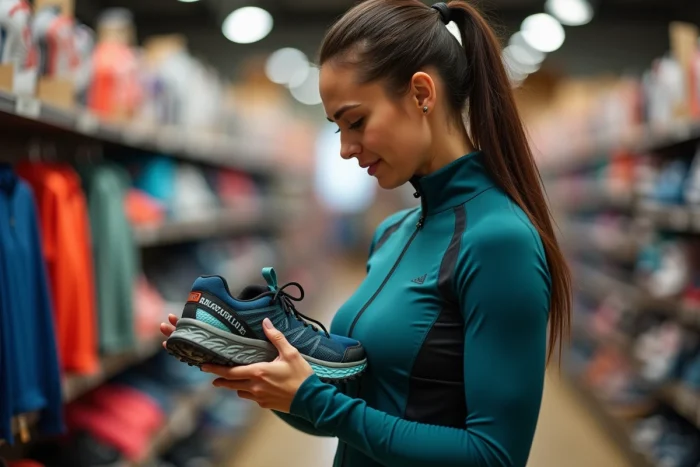
On asphalt, cushioning is needed. On trails, grip and a reinforced upper are sought. In a gym or fitness center, the sole should remain flat to stabilize support. It is the practice surface that determines the pair, not the logo.
For running, the drop and cushioning are chosen according to the weekly volume. A regular runner who exceeds twenty kilometers per week should prioritize the durability and technicality of the midsole. An occasional practitioner will more naturally lean towards the quality-price ratio.
This difference in criteria between profiles is confirmed by Kantar’s Running and Trail Barometer 2026, which shows that low-mileage runners prioritize price while more dedicated ones focus on reliability.
You can compare the available models in the equipment selection on Sportivoz to identify technical characteristics before trying them in-store. Trying on remains the final filter: two shoes with the same drop will never fit the same way depending on foot width.
Connected Sports Clothing: Gadget or Real Purchase Criterion
Integrated sensors directly in the fabric now measure heart rate, posture during a squat, or training load during a marathon. This segment, identified by Fortune Business Insights as a major growth lever for the sportswear market from 2025 to 2034, has moved beyond the prototype stage.
A connected garment replaces a watch or a chest strap heart rate monitor, freeing up wrists and the chest area. For a runner who hates wearing a sensor on their chest, a technical t-shirt with electrodes woven into the fabric changes the game. In weightlifting, some leggings analyze joint range and signal postural compensation in real time.
Feedback varies on the reliability of these textiles after several dozen washes. Before investing, check the sensor’s warranty and compatibility with the tracking app you already use.
Adapting Sports Equipment to Your Level and Frequency
Buying high-end equipment for two sessions a month is overkill. Conversely, a regular practitioner who keeps entry-level shoes for a year exposes themselves to joint pain. The training volume sets the level of equipment, not ambition.
Here are the concrete criteria to consider before any purchase:
- The weekly frequency: below two sessions, mid-range equipment largely covers needs for comfort and support.
- The type of practice: a fitness class indoors does not stress equipment like a trail on wet terrain, and shoes, clothing, and accessories differ radically.
- Body shape and weight: a heavier runner wears out soles faster and needs denser cushioning than a lighter build.
- Weather conditions: outdoors, a waterproof and breathable membrane is not a luxury if you run in the rain one out of three times.
Regarding the comfort of clothing, flat seams and ventilation zones matter more than the fabric weight. A lightweight t-shirt but poorly cut will cause chafing by the fifth kilometer. Touching the fabric, checking the seam placement under the armpits and at the collar, then making a few range-of-motion movements in the fitting room: these three actions filter out most bad choices.
Maintaining Sports Equipment: Extending Lifespan Without Extra Cost
We often talk about the initial choice, rarely about what happens after fifty uses. A pair of running shoes loses a significant part of its cushioning after several hundred kilometers, but this threshold varies depending on the runner’s weight and the surface.
Washing technical textiles at low temperatures and without fabric softener preserves their moisture-wicking properties. Fabric softener clogs the micro-pores of the fabric, negating the breathable effect after a few washes. For shoes, removing the insole after each outing and letting it air dry (not on a radiator) is enough to limit bacterial growth and deformation.
Here are some concrete actions to extend the lifespan of your equipment:
- Alternate two pairs of shoes if you run more than three times a week, to allow the foam to regain its shape.
- Store technical clothing flat or on hangers, never compressed at the bottom of a bag for several days.
- Check the condition of the outsoles every two months: uneven wear signals a postural imbalance to correct before repurchasing.
Well-maintained sports equipment does not replace suitable gear from the start, but it helps avoid premature repurchases. Crossing terrain, frequency, and body shape remains the foundation of a good choice, whether you are starting fitness in a gym or preparing for a marathon. The rest is regular maintenance and common sense.