
The French automotive market offers two main categories of vehicles: new, factory-fresh with a configuration chosen by the buyer, and used, already registered at least once. Between the two, a third option is gaining ground: the so-called 0 km vehicle, never driven but already registered, which combines a reduced price and immediate availability.
0 km Vehicle: A Segment Between New and Used
A 0 km vehicle is a new car registered by a dealer or an intermediary, but never delivered to a final customer. Legally, it becomes a used vehicle upon its first registration. In practice, it has never been driven.
The main interest lies in the price. The depreciation associated with this first registration allows for obtaining a vehicle in new condition with a discount that is often significant compared to the catalog price. The second advantage is the timeframe: while a factory order can take several months, a 0 km vehicle is available in stock, sometimes within a few days.
This compromise attracts buyers who want a Peugeot, a Citroën, or another recent model without waiting for production. However, there is still one point to verify: the date of first registration, which affects the calculation of the manufacturer’s warranty. The warranty starts from the registration, not from the delivery, which can cut several months off the coverage.
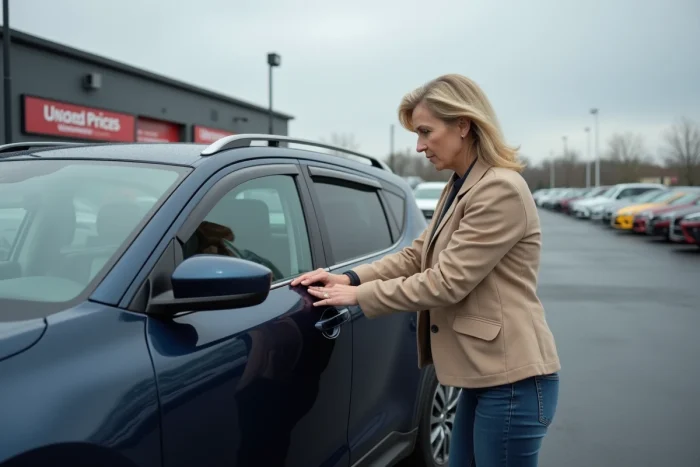
Offers for New and Used Cars: What Distinguishes a Good Deal from a Trap
Comparing ads for new or used cars requires looking beyond the displayed price. A low price means nothing if additional costs (registration fees, missing options, ecological penalties) inflate the final bill.
To structure the comparison, several criteria deserve special attention:
- The all-inclusive price, including registration fees, delivery, and any additional equipment added later. Some sellers display a price excluding registration fees, which skews the comparison.
- The maintenance history for a used vehicle: invoices, stamped service book, number of owners. A well-maintained gasoline or diesel vehicle with high mileage is often worth more than a recent model with no maintenance record.
- The engine type and its consistency with the intended use: a plug-in hybrid loses all interest if daily trips far exceed its electric range, while a diesel remains relevant for high-mileage drivers.
- Local availability: a vehicle stored near you allows for a physical inspection, a test drive, and direct negotiation, three elements that remote purchases cannot fully replace.
Multi-brand platforms and dealerships, like those found on cityautomobiles.fr, gather stocks of new and used vehicles with a focus on geographical proximity. This local approach simplifies visits and shortens delivery times.
Warranty and Traceability in the Recent Used Car Market
The main barrier to purchasing a used vehicle remains trust. Professional distribution networks address this concern with increasingly structured commitments.
The seller’s warranty complements the manufacturer’s warranty on recent vehicles. A model less than two years old still benefits from the manufacturer’s coverage, to which the professional seller often adds an extension covering the powertrain or onboard electronics.
The traceability of the vehicle is the other pillar of reassurance. A serious professional provides the history report (number of owners, declared accidents, certified mileage) and maintenance invoices. In the used segment, this transparency distinguishes a reliable offer from an opaque listing between private individuals.
Verification Points Before Signing
Before signing an order form, three checks take less than ten minutes and avoid most unpleasant surprises:
- Compare the mileage displayed on the odometer with that of the last technical inspection and maintenance invoices. An unexplained discrepancy is a warning sign.
- Check the end date of the manufacturer’s warranty, especially on 0 km vehicles where the warranty has already started.
- Request a test drive on varied roads (city, highway, if possible) to detect any suspicious noises, abnormal behavior of the manual or automatic transmission, or uneven braking.

Proximity and Available Stock: The Local Shift in the Auto Market
Car buying habits are evolving towards a logic of immediately available stock at local dealerships. Rather than configuring a vehicle on a national site and waiting several months, many buyers prefer to check the actual stock of a dealership or a nearby multi-brand agency.
This local shift is explained by reduced delivery times, but also by the possibility of seeing and trying the vehicle before purchase. Multi-brand dealerships, in particular, offer on the same site models from Peugeot, Citroën, Renault, or other manufacturers, allowing for physical comparison of competing vehicles without multiplying trips.
Pages dedicated by city or department, found at several regional distributors, facilitate this local search. They display the actual stock, sometimes updated daily, with prices, engine types (gasoline, diesel, hybrid), and actual availability.
Leasing, especially rental with an option to purchase, fits into this same logic of proximity. Signing a leasing contract at a local dealership allows for managing maintenance, servicing, and potential return at the same location, without coordination between distant contacts.
The offer of new and used vehicles is now structured around two axes: transparency regarding the price and condition of the vehicle, and geographical proximity of the point of sale. A buyer who considers these two criteria significantly reduces the risk of disappointment after purchase.