
Fruits occupy an ambiguous place in diets aimed at muscle mass gain. Often reduced to their simple sugar content, they are sometimes excluded in favor of sources denser in protein or complex carbohydrates. The nutritional reality is more nuanced: beyond calories, certain compounds found in fruits affect recovery, mitochondrial function, and even cell signaling related to protein synthesis.
Polyphenols and Muscle Protein Synthesis: An Underestimated Lever
Most guides on fruits in bodybuilding focus on carbohydrates and vitamins. They overlook a mechanism that is gaining interest in recent scientific literature: the role of polyphenols on muscle function.
A review published in 2023 in the journal Nutrients (Clifford T. et al.) indicates that flavonoid-rich extracts from fruits improve mitochondrial function and muscle performance in athletes. The polyphenols present in berries, grapes, or citrus fruits can modulate mTOR signaling, a central pathway in muscle protein synthesis. They also help reduce oxidative stress after training.
A point of caution: the doses used in studies are often higher than those obtained through diet alone. Eating a handful of blueberries after a weight training session provides antioxidants, but reproducing the effects described in the lab would require a much greater consumption.
The available data do not allow us to conclude that an isolated fruit, consumed in usual quantities, triggers a measurable effect on hypertrophy. Several publications discuss fruits for mass gain on Sport Mag from a complementary angle, intersecting nutrition and practical advice.

Caloric Density of Fruits: Which Ones Truly Support Mass Gain
Gaining muscle mass requires a caloric surplus. In this regard, not all fruits are equal. A fruit high in water and low in carbohydrates does not weigh heavily against the energy needs of someone in a muscle-building phase.
High-Energy Density Fruits
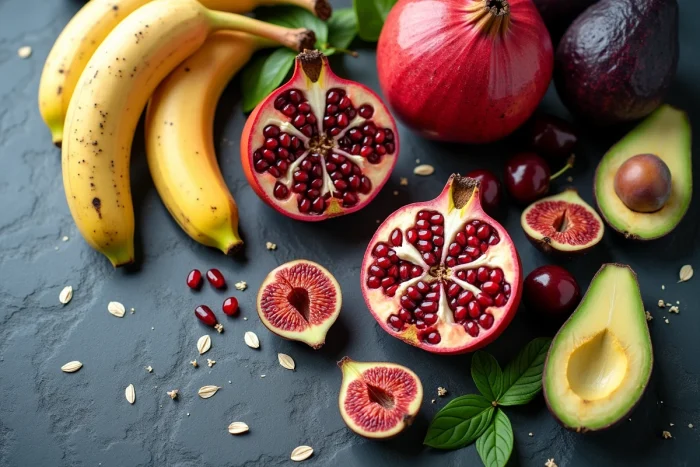
The banana remains the most popular choice, and for a simple reason: it combines fast carbohydrates, potassium, and ease of transport. Consumed around training, it provides immediate fuel without requiring preparation.
The avocado, although a fruit, stands out for its lipid profile. Its monounsaturated fats contribute to hormonal balance, a factor that influences the body’s ability to build muscle. However, its protein content remains marginal.
Dried fruits (dates, figs, raisins) concentrate calories dramatically once the water is removed. They easily fit into a shaker or a bowl of oatmeal to increase caloric intake without excessive volume in the stomach.
Fruits to Avoid in Large Quantities
Watermelon or melon, composed mostly of water, provide few calories per serving. They have their place in a varied diet, but relying on them to achieve a caloric surplus would be a strategic error.
Timing of Consumption: When to Eat Fruits for Mass Gain
The timing of fruit consumption alters its usefulness in a muscle mass gain program. The carbohydrates in fruits, primarily fructose and glucose, have different metabolic impacts depending on whether they arrive before, during, or after exercise.
- Before training, a fruit with a moderate glycemic index (apple, pear) provides gradual energy without causing a sharp insulin spike followed by a drop in performance.
- After training, the recovery window favors the absorption of fast carbohydrates. Bananas or dates, paired with a protein source, accelerate muscle glycogen replenishment.
- As a snack away from effort, nuts (walnuts, almonds) provide fatty acids and a dense caloric supplement, useful for maintaining the surplus without forcing food volume.
Field feedback varies on this point: some practitioners poorly tolerate fructose in large amounts around exercise, experiencing digestive discomfort that limits performance. Adapting fruit choice to individual digestive tolerance remains more relevant than following a universal list.
Fruits and Micronutrients Critical for Muscle Recovery
Beyond calories and carbohydrates, some fruits provide micronutrients that directly affect the muscle’s ability to repair after intense effort.
Vitamin C, abundant in kiwis and citrus fruits, plays a role in repairing connective tissues and collagen synthesis. Regular intake supports the integrity of tendons and ligaments, structures stressed during heavy strength exercises.
Potassium, found in notable amounts in bananas and avocados, contributes to fluid balance and muscle contraction. A potassium deficiency often results in cramps and slower recovery, two direct barriers to progress in bodybuilding.
- Kiwi: high vitamin C content, moderate fiber, low in calories but useful for tissue recovery.
- Banana: potassium, fast carbohydrates, unmatched logistical convenience for athletes.
- Berries (blueberries, raspberries): concentration of polyphenols and antioxidants favorable for reducing post-exercise inflammation.
A fruit does not replace a complete meal rich in protein and complex carbohydrates. Its role in mass gain is that of a strategic supplement, not a caloric pillar. Choosing two or three fruits suited to one’s needs and tolerance, then integrating them at specific times of the day, yields more results than accumulating ten different varieties without nutritional logic.