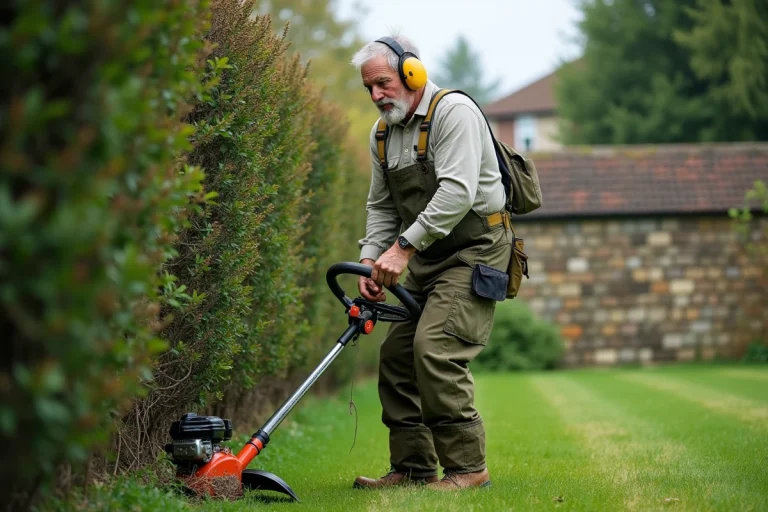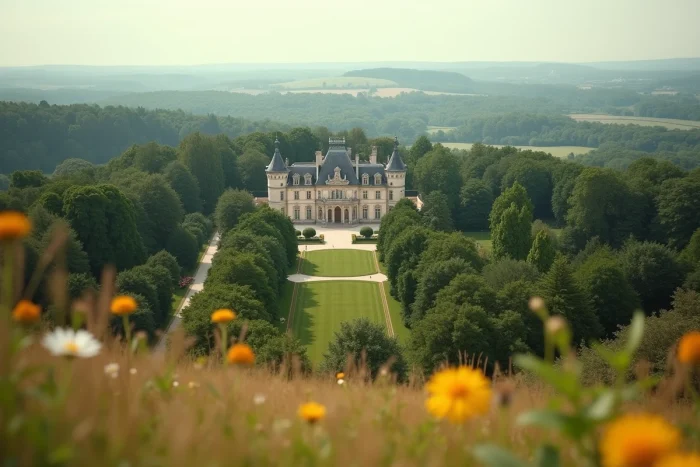
France has private estates whose area exceeds that of some entire municipalities. These properties, often inherited over several generations, combine forests, agricultural land, wetlands, and historic buildings. Their management follows logics that go beyond mere luxury real estate: environmental constraints, heritage taxation, and conservation obligations. The subject is fascinating, but reliable data remains scarce, as owners cultivate discretion.
A first benchmark: the largest private properties in France are mostly located in rural or forested areas, far from the Parisian representations of luxury real estate. Their size is measured in thousands, sometimes tens of thousands of hectares. To learn more about the largest private property in France, one must first understand what distinguishes these estates from the châteaux or private hotels usually publicized.
Biodiversity and Wetlands: The Constraint Redrawing Large Estates
The least visible angle, yet the most structuring today, concerns regulatory pressure on biodiversity. Large rural and forest estates are now directly subject to obligations related to species protection, ecological continuities, and wetlands.
The “avoid-reduce-compensate” sequence, framed by the Ministry of Ecological Transition, requires owners to justify any development likely to affect a natural habitat. An owner wishing to drain a plot, build an agricultural building, or modify a watercourse must now go through a lengthy administrative process.
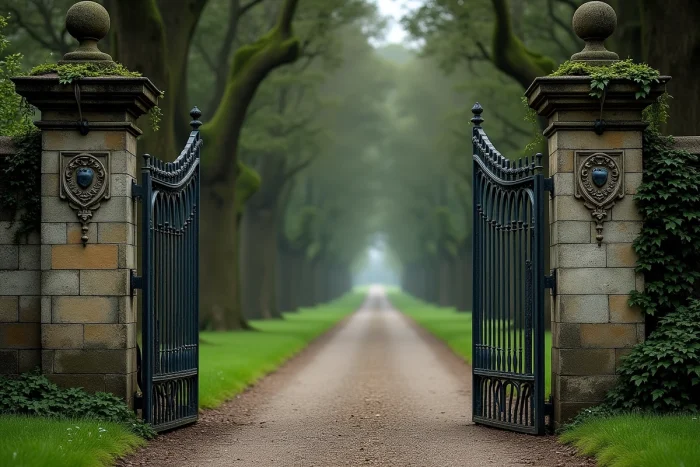
Managing a large private estate also means managing an ecological heritage. The French Office for Biodiversity (OFB) regularly publishes recommendations on biodiversity management in private ownership. These documents, little publicized, concretely transform the way the largest French estates are operated.
Owners of large forest estates must, for example, comply with management plans validated by the administration. Any massive logging, change of species, or modification of edges can trigger a control. The forest, which often constitutes the majority of these properties, is no longer a mere land asset: it is a space subject to increasingly strict environmental rules.
Taxation of Large Private Properties in France: A Strained Regime
Owning an estate of several thousand hectares generates specific tax burdens. The real estate wealth tax (IFI) applies to net real estate assets, and vast rural properties are not exempt, even if their market value is sometimes difficult to estimate.
Forest lands benefit from a tax reduction under certain conditions, notably the commitment to sustainable management over a long period. This system, designed to prevent the fragmentation of French forests, allows owners to reduce the taxable base. However, it imposes real countermeasures: presentation of a simple management plan, adherence to scheduled cuts, and maintenance of forest biodiversity.
The transmission of these estates poses a recurring problem. Inheritance taxes on a property of this magnitude reach considerable amounts. Several solutions exist:
- Property dismemberment (usufruct/naked ownership), which allows for anticipating transmission by reducing the taxable base at the time of death
- Creation of an agricultural land group (GFA) or a forestry group, legal structures that facilitate collective ownership and offer specific tax advantages
- Recourse to the Dutreil pact adapted to agricultural or forestry activities, which can significantly reduce transfer taxes on the condition of property conservation
Without a transmission strategy, a large estate can disappear in a generation. This explains why some of the largest private properties in France have changed hands in recent decades, purchased by investors or family groups with the necessary financial resources.
Opening to the Public and Private Heritage: A Trend Accelerating
The European Heritage Days, held every year in September, have allowed for several editions the exceptional opening of private sites usually closed to the public. The Heritage Foundation supports this dynamic by identifying and supporting properties of historical or architectural interest.
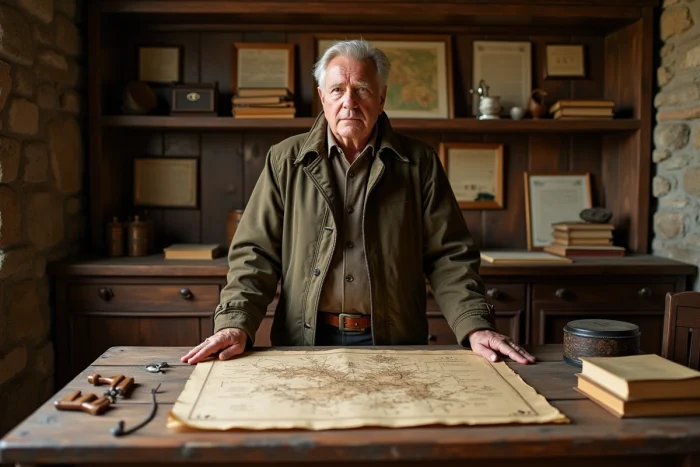
This opening is not altruistic. For owners, it meets several objectives:
- Justifying the obtaining of public subsidies for the restoration of classified or listed historic buildings
- Generating additional income (paid visits, events, filming) that contributes to the ongoing maintenance of the estate
- Meeting the expectations of local authorities, who see these properties as a tourism lever for rural areas that are sometimes struggling
The occasional opening of a private estate does not mean total transparency. Owners carefully choose the accessible spaces and the information communicated. The oldest parts, family archives, hunting areas, or sensitive natural spaces generally remain off the beaten path.
Real Estate Market of Large Estates: Opaque Transactions
The market for very large private properties in France does not operate like that of classic residential real estate. Transactions most often occur privately, without publication on the usual portals. Specialized agencies in this segment are few and work within a closed network of potential buyers.
Purchasers of large estates are often wealthy families, French or foreign, investment groups in forestry, or sometimes public authorities as part of preemption policies. The motivations for purchase vary: building a land heritage, hunting projects, asset diversification, or simply an attraction to a large-scale rural lifestyle.
The available data does not allow for conclusions on the recent evolution of prices per square meter for this type of property. Estimates depend on location, soil quality, the presence of classified buildings, the condition of forests, and the configuration of plots. Two estates of comparable size can display very different valuations based on these criteria.
The largest private property in France remains an object at the crossroads of historical heritage, environmental management, and tax strategy. Beyond the area, it is the administrative and legal complexity that strikes: the owner is both a forest manager, a contact for the OFB, a taxpayer subject to the IFI, and sometimes a local cultural player.
The discretion surrounding these estates is not merely an aristocratic whim. It reflects the real difficulty of reconciling all these obligations.