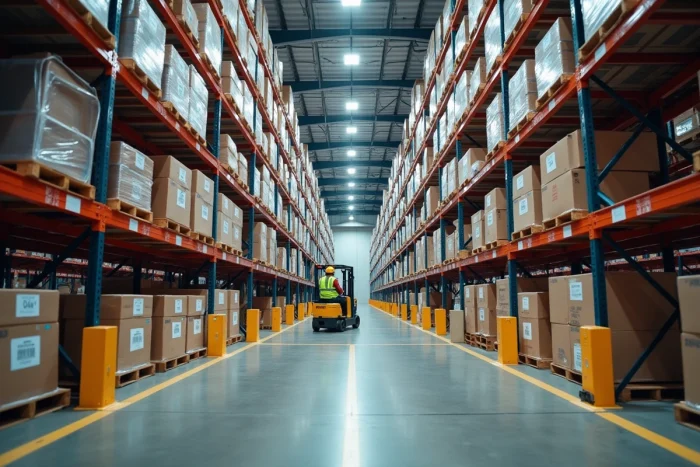
A logistics platform is a physical site designed to receive, sort, temporarily store, and reship goods without them remaining permanently on-site. This transit function distinguishes it from a traditional warehouse, whose primary purpose is long-term storage.
Energy Constraints of Logistics Platforms in France
Large logistics buildings are directly targeted by the tertiary decree, which imposes a gradual reduction in final energy consumption in tertiary buildings over 1,000 m². The set objectives are clear: a 40% reduction by 2030, 50% by 2040, and 60% by 2050, compared to a reference year. Operators must report their data on the Ademe’s OPERAT platform.
At the European level, the recast Energy Performance of Buildings Directive (EPBD), definitively adopted by the European Parliament on March 12, 2024, will impose stricter standards on new and existing logistics buildings. Decarbonization, minimum renovation, and digital monitoring of consumption via a renovation passport are among the upcoming obligations.
These constraints modify the very design of modern platforms. Enhanced insulation, LED lighting with presence detection, rooftop photovoltaic panels, and automated heating management become priority investment areas from the construction phase. To delve deeper into the operation of a logistics platform on Génération Entreprise, these regulatory dimensions illuminate the current technical choices of operators.

Goods Flow: Reception, Sorting, and Shipping on a Platform
The operation of a logistics platform relies on a sequence of operations carried out in a short time frame. Each step conditions the next, and a delay at reception mechanically propagates to delivery.
Reception and Quality Control
Goods arrive by truck, container, or sometimes by rail. A quantitative and qualitative control is performed at the dock: checking delivery notes, visually inspecting the condition of products, scanning barcodes or RFID labels. Any anomaly detected at reception prevents an error further down the chain.
Sorting and Cross-Docking
On some platforms, products never go through a storage area. Cross-docking involves directly transferring goods from the reception dock to the shipping dock, after a simple sorting by destination. This method reduces processing times and limits costs associated with stock immobilization.
When temporary storage is necessary, products are assigned to identified locations in the management system. The duration of stay remains short, often less than a few days.
Order Preparation and Shipping
Order preparation (picking) is organized according to several methods based on the volume and nature of the orders:
- Unit picking, where the operator picks items one by one for each order, suitable for low-volume flows
- Wave picking, which groups several orders into a single picking run to reduce movements
- Automated picking, where conveyors or robots bring products to the operator (goods-to-person method), used in high-throughput platforms
After packaging and labeling, parcels are grouped by delivery run and loaded into vehicles. The synchronization between preparation and truck departure determines the punctuality of the final delivery.
The Role of WMS in Managing a Logistics Platform
The WMS (Warehouse Management System) is the software that orchestrates all physical operations of a platform. Without it, the traceability of goods relies on manual records, a source of errors and delays.
A WMS automatically assigns a storage location to each incoming product, taking into account turnover rate, weight, volume, and temperature constraints. It generates picking orders and optimizes operators’ routes in the aisles. The WMS reduces preparation errors and speeds up order processing.
Real-time visibility of stocks is another direct benefit. The manager knows at all times what is available, what is in transit, and what is waiting to be shipped. This data allows for adjustments in supply and helps avoid stockouts or overstocking.
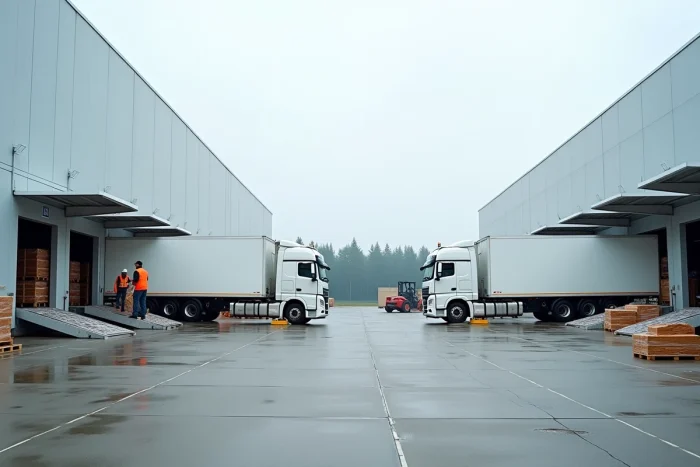
Multi-Story Warehouses: A Response to Rare Logistics Land
Single-story platforms occupy considerable areas, which poses an increasing problem in urban and peri-urban areas where available land is becoming scarce. In recent years, several multi-story warehouse projects have emerged in Western Europe, a model already widespread in Asia.
The principle consists of stacking several levels of operation, each accessible via ramps for heavy trucks or industrial freight elevators. This configuration multiplies storage and sorting capacity on a reduced footprint.
The construction cost is significant compared to a single-story building. The structure must support heavy loads at each level, and internal circulation routes are more complex to design. This model is particularly justified in areas where land prices and proximity to consumption basins offset the additional investment.
Criteria for Locating an Efficient Logistics Platform
The location of a platform directly affects transport costs and delivery times. Several factors guide this choice:
- The proximity to road and highway networks, which remains the dominant criterion for truck flows
- Access to a multimodal hub (rail, river, port) to diversify transport modes and reduce costs over long distances
- The availability of skilled labor in the local labor market, a factor often underestimated that impacts operational capacity
- Local regulatory constraints, particularly delivery hours allowed in urban areas and applicable environmental standards
A good location reduces the kilometers traveled and delivery times to the final customer. Platforms located on the outskirts of major urban areas can cover a large population basin while benefiting from more accessible land than in the city center.
The choice between operating one’s own platform or using a logistics provider depends on the volume of flows, the seasonality of the activity, and the level of control desired over operations. For companies with highly fluctuating volumes, sharing a platform with other shippers remains an option that smooths fixed costs without sacrificing service quality.