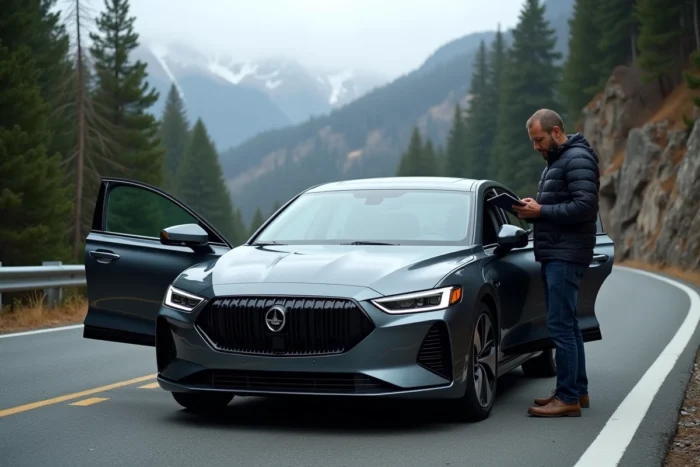
The French automotive market is undergoing a period of accelerated restructuring. Between the launches of competitively priced electric models, industrial restructuring at Stellantis, and the tightening of European rules on environmental communication, the first half of 2026 concentrates movements that reshape the available offerings for buyers. Here are the key areas to watch to understand what is really at stake this year.
Automotive Greenwashing: European Investigations That Change the Game
The tests and technical sheets published by the automotive press mention the ecological penalty and the Crit’Air sticker. They largely overlook a structuring issue: European investigations into manufacturers’ greenwashing.
In 2024, the CPC (Consumer Protection Cooperation) network, coordinated by the European Commission, launched a joint action targeting several brands for the use of potentially misleading environmental terms in automotive advertising. Phrases like “zero emissions” or “carbon neutral” are under scrutiny, continuing actions already taken in fashion and aviation.
To follow these topics throughout the year, daily-auto.com regularly shares news that goes beyond mere product testing. This regulatory pressure forces manufacturers to rethink their marketing vocabulary, which changes how new products are presented to the public.
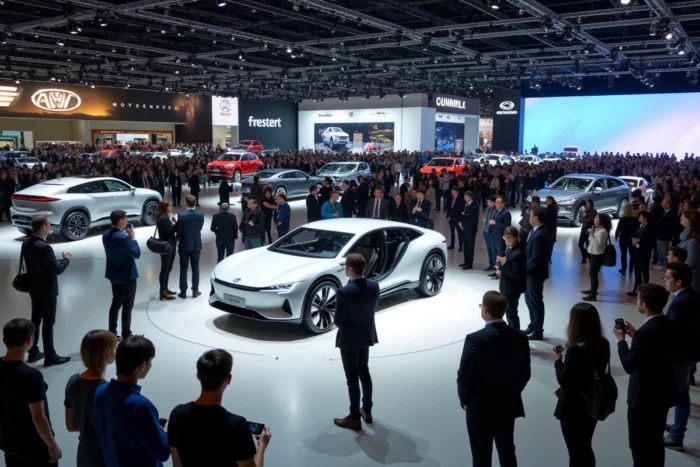
In France, the decree of December 28, 2021 (in effect since March 1, 2022) already requires that any advertisement for a new vehicle displays a message encouraging walking, cycling, or public transport. This obligation also applies to digital content, including sponsored test videos. Field feedback varies on this point: some automotive media include the mention, while others relegate it to the bottom of the page without real visibility.
Electric Innovations 2026: Beyond Technical Sheets
The launch calendar has intensified. The Kia EV2, tested this spring, illustrates the strategy of Korean manufacturers in the compact electric SUV segment. The Renault Clio 6 E-TECH and the Renault 4 E-TECH are making their mark on the French side, while Peugeot is repositioning its restyled e-408 and its 308 SW plug-in hybrid.
On the premium side, the Volvo EX60 arrives with high range and fast charging, while Mercedes launches its new hybrid CLA. These models compete in a segment where the purchase price remains the primary barrier for individuals.
The open question remains: are these vehicles truly accessible in the used market, or is the available volume still too low to impact prices? The available data does not yet allow for a conclusion, as most of these models have only been on the market for a few months.
Chinese Models Lurking
The Xiaomi YU7 GT boasts over 1,000 hp for a price under 50,000 euros. MG continues to develop its range with the MG4 Urban, positioned as an entry-level electric compact. These Chinese offers exert direct pressure on European prices, but their after-sales network in France remains a question mark for both purchase and maintenance.
Stellantis and the Reorganization of Its Automotive Brands
Stellantis has unveiled its strategic plan for its fourteen brands. The group must balance between historic labels (Citroën, Peugeot, Fiat, Alfa Romeo) and the need to streamline its platforms. The distribution of investments between mainstream and premium brands will determine which models will be genuinely renewed and which will see their range reduced.
The Citroën case is emblematic: rumors of a return of the 2CV in a neo-retro form fuel speculation, but no industrial confirmation has been given at this stage. Meanwhile, some brands in the group have already exited European markets, as recently happened in Germany.
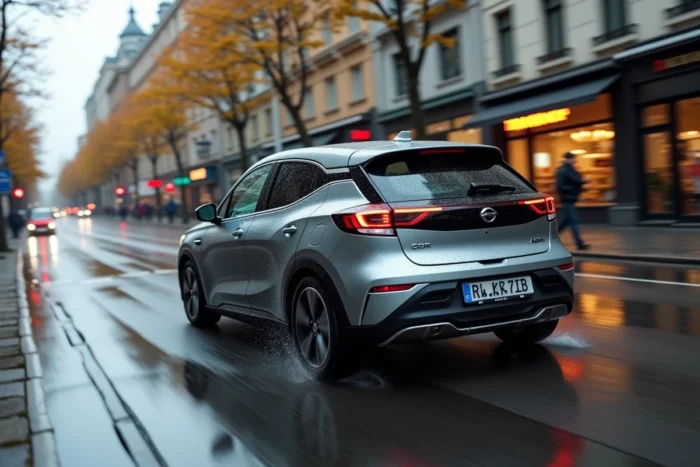
What Impact on the Used Market in France?
The restructuring of Stellantis has direct consequences on the residual value of the affected vehicles. A model whose brand reduces its presence in a market loses attractiveness at resale. For used vehicle buyers, checking the sustainability of the brand’s network becomes a purchasing criterion as relevant as mileage or mechanical condition.
Charging Infrastructure: Saturation as a New Topic
Charging stations for electric vehicles on highways are beginning to show signs of strain during major departures. Le Figaro has raised the issue of potential saturation, a topic that was not a concern two years ago.
- Fast charging stations on highways are sized for a still-minority electric fleet, but the growth in registrations exceeds initial deployment forecasts.
- Two fire incidents involving Volkswagen ID. Buzz at TotalEnergies stations in five days have reignited the debate on the safety of shared infrastructures.
- A new role is emerging at some rest areas: the “placer,” responsible for organizing queues at charging stations during peak times.
These signals show that the real-world charging experience is becoming as critical a criterion as the range displayed on the technical sheet. Tests that only measure charging speed in a lab miss this on-the-ground reality.
Connected Tires and Automotive Maintenance: A Quiet Transformation
The connected tire, capable of collecting data and communicating with driving aids, is beginning to appear on high-end models. This technology could eventually monitor road conditions and adapt the vehicle’s behavior in real time.
For motorists, this means a shift in the approach to maintenance. The tire is no longer a passive consumable replaced every few tens of thousands of kilometers: it becomes a sensor integrated into the vehicle’s system. The replacement cost of these connected tires remains to be monitored, as it could significantly alter the annual maintenance budget.
The automotive news this year is not just a list of new products. The real stakes lie in European regulations on greenwashing, the ability of charging infrastructures to absorb the growth of the electric fleet, and the industrial choices of groups like Stellantis. These parameters, more than the power of an engine or the size of a screen, will determine the automotive landscape of the coming years in France.